Ramsgate Harbour
Reimagining Ramsgate’s Port and Royal Harbour as a working waterfront for the clean-energy age. From financial liability to civic engine — a harbour designed for the next century.
Type Masterplan
Client Undisclosed
Location Ramsgate, UK
Size 65.4 Hectares
Budget Undisclosed
Status RIBA Stage 2 Concept Design
Ramsgate Harbour has always been a place of exchange — between land and sea, industry and town, work and leisure. Yet over the last decade the port and harbour have slipped into steady decline, accumulating significant financial losses while remaining physically and strategically underutilised. Rather than treating this condition as a failure to be patched, TaylorHare approached the harbour as a latent civic asset — one capable of anchoring a new, long-term economic identity for the town.
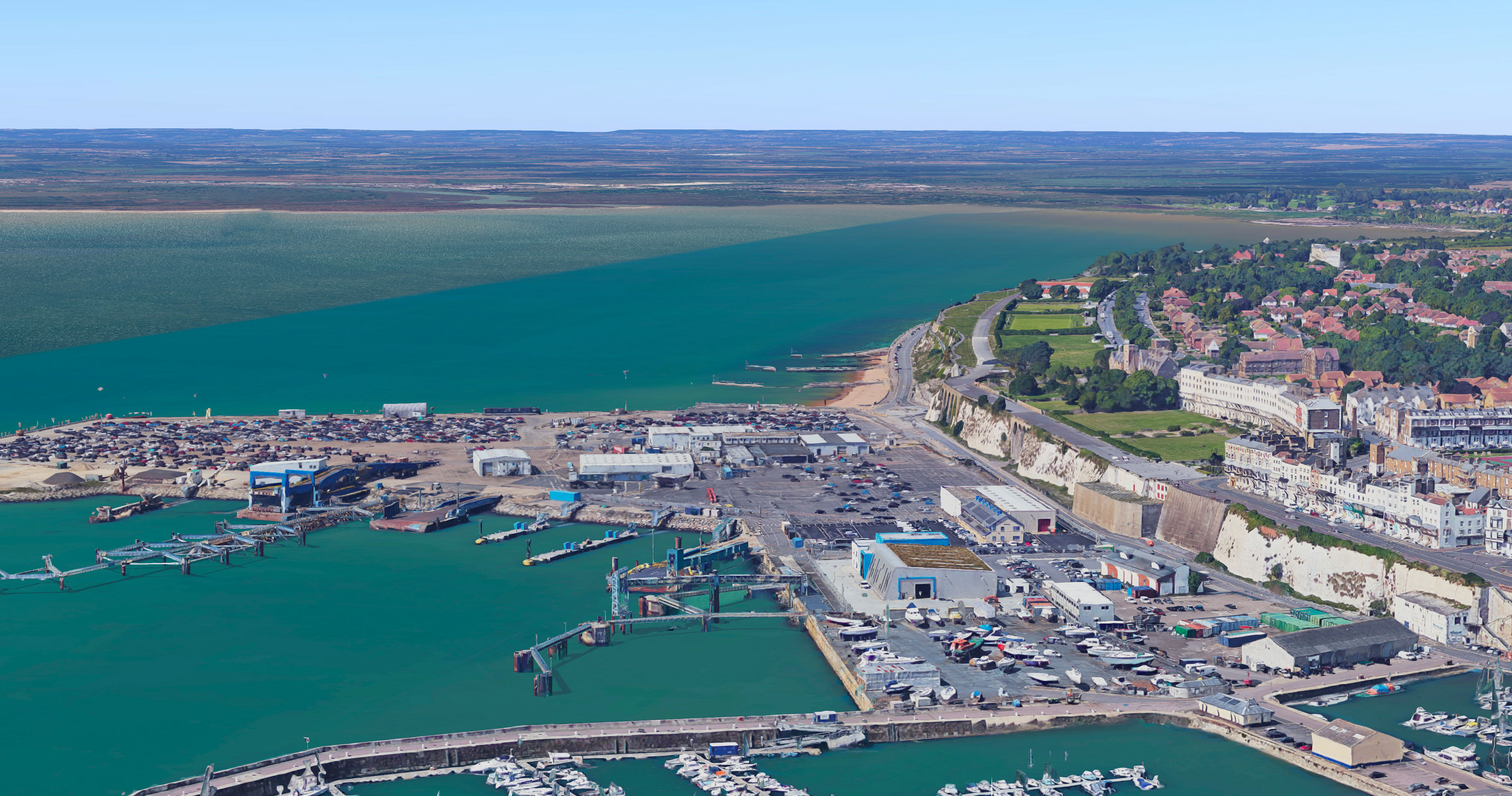
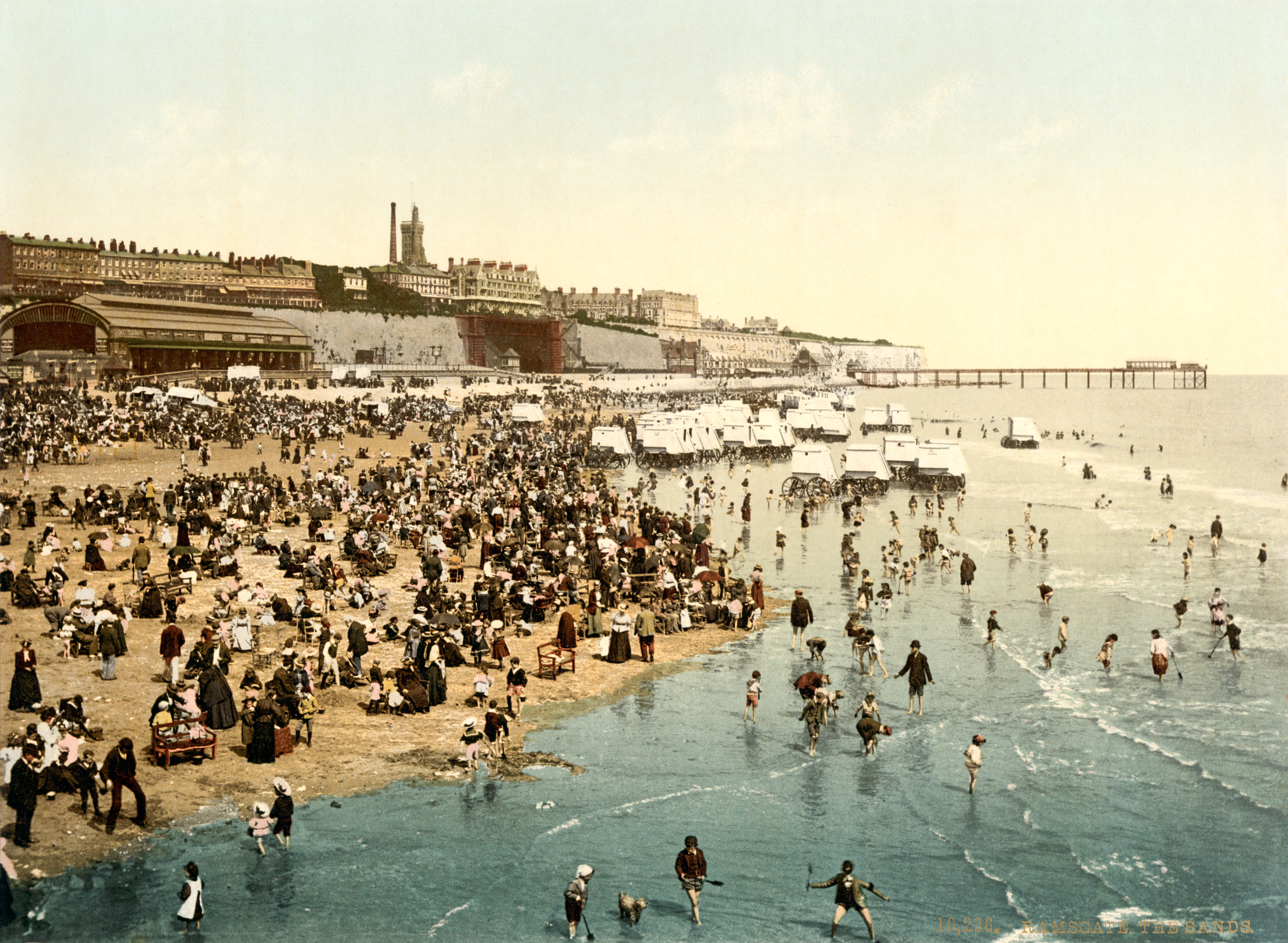
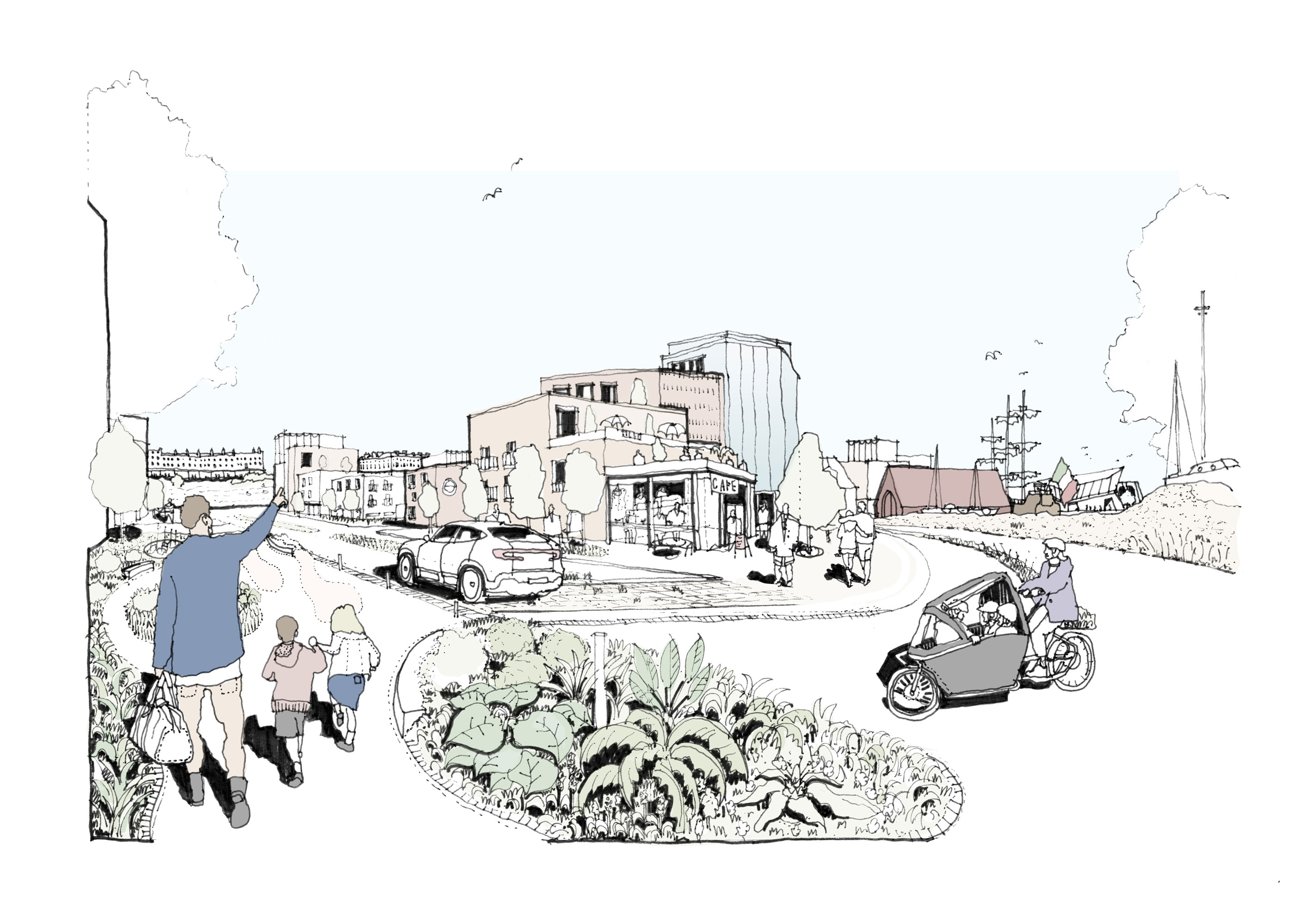
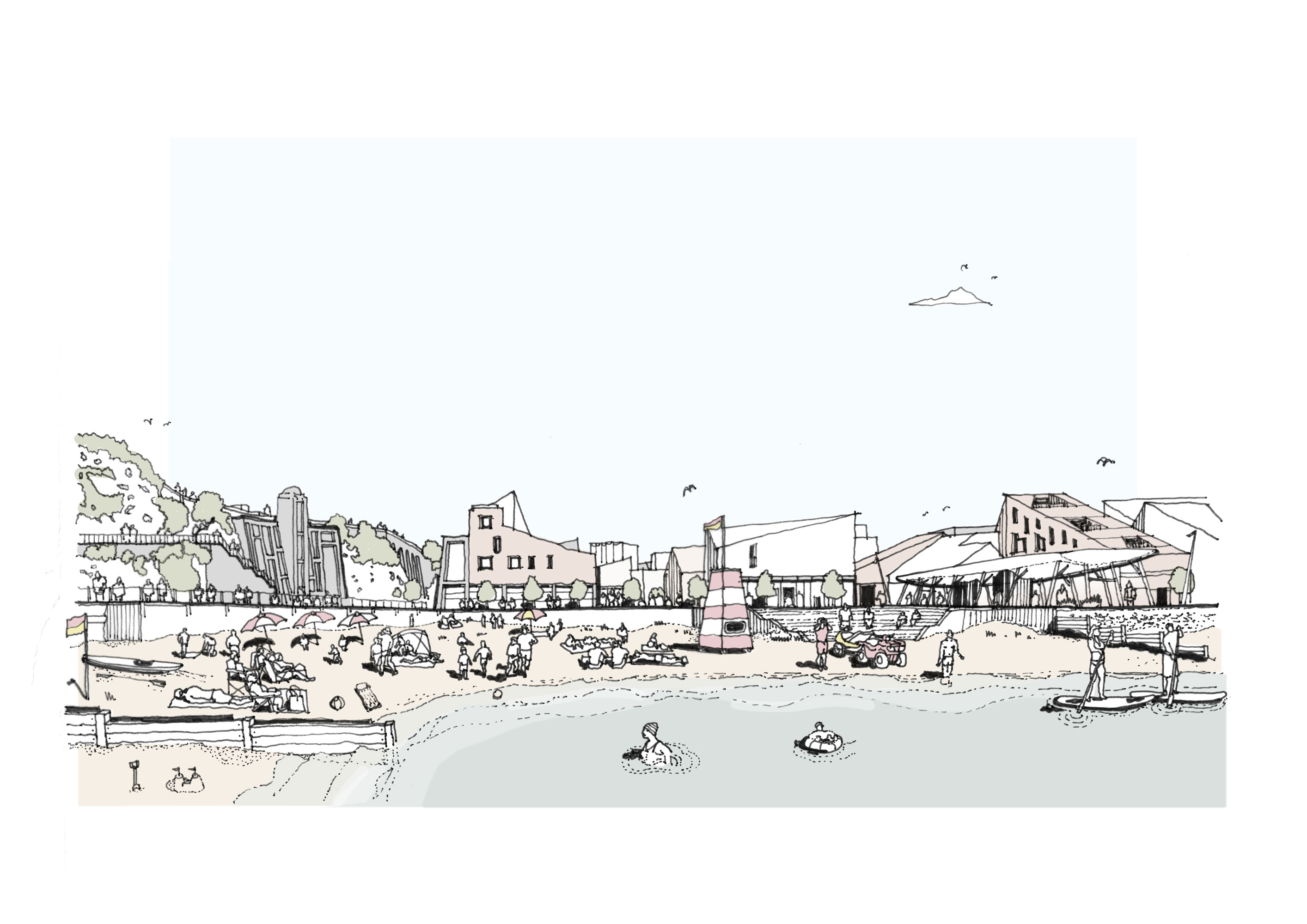
For over seven years, the practice has been embedded in Ramsgate, developing and testing ideas for the harbour’s future through a self-initiated, self-funded feasibility study. This work was driven by a belief that meaningful regeneration demands more than short-term commercial fixes. It requires a vision that aligns economic viability, environmental responsibility and civic value — and a framework capable of attracting both public and private investment over time.
‘Long-term regeneration requires patient capital, strategic phasing and a clear civic purpose.’
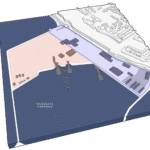
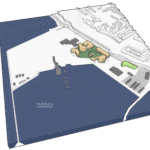
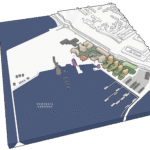
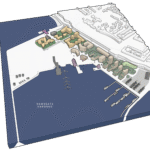
1/7
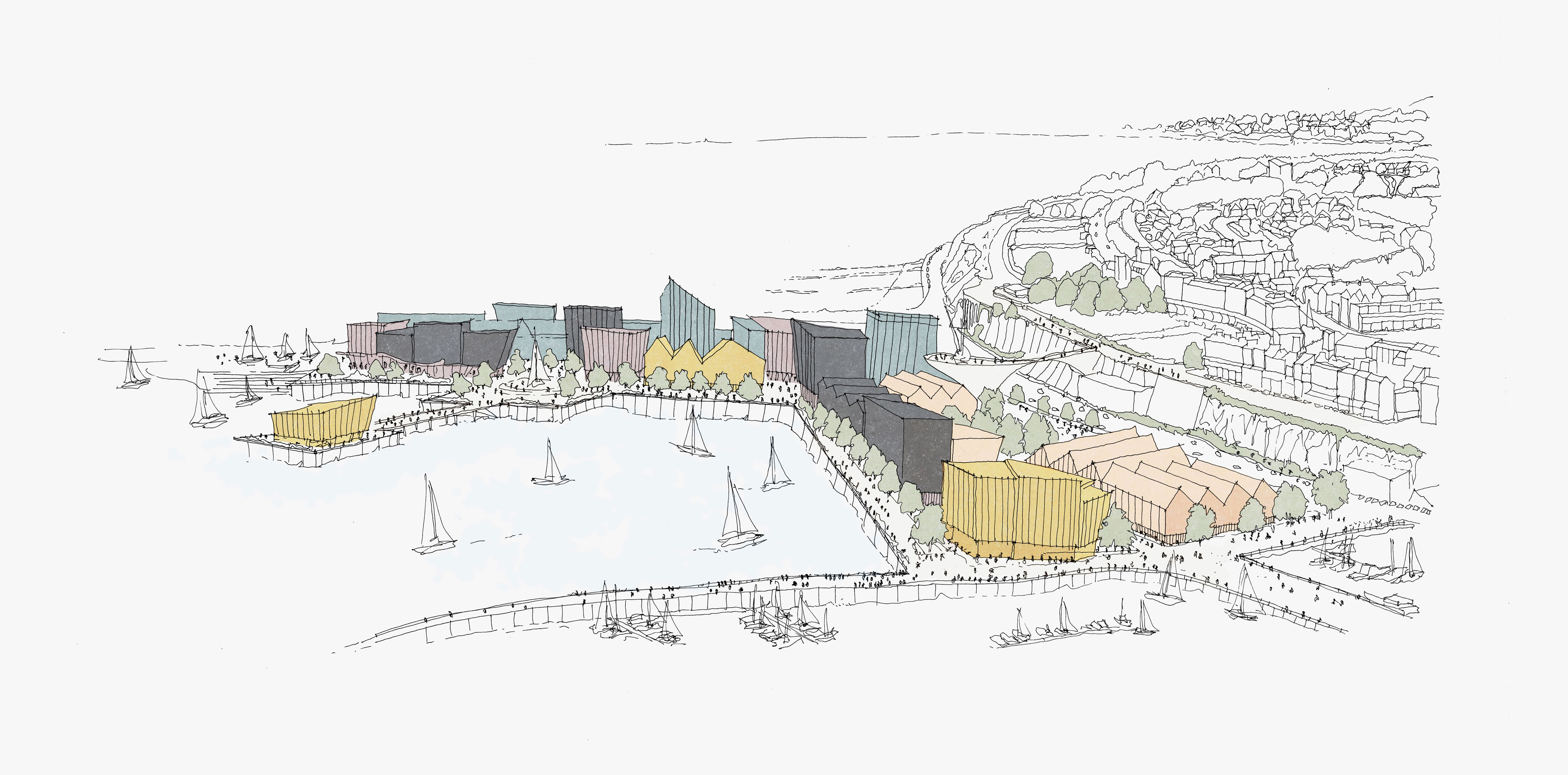
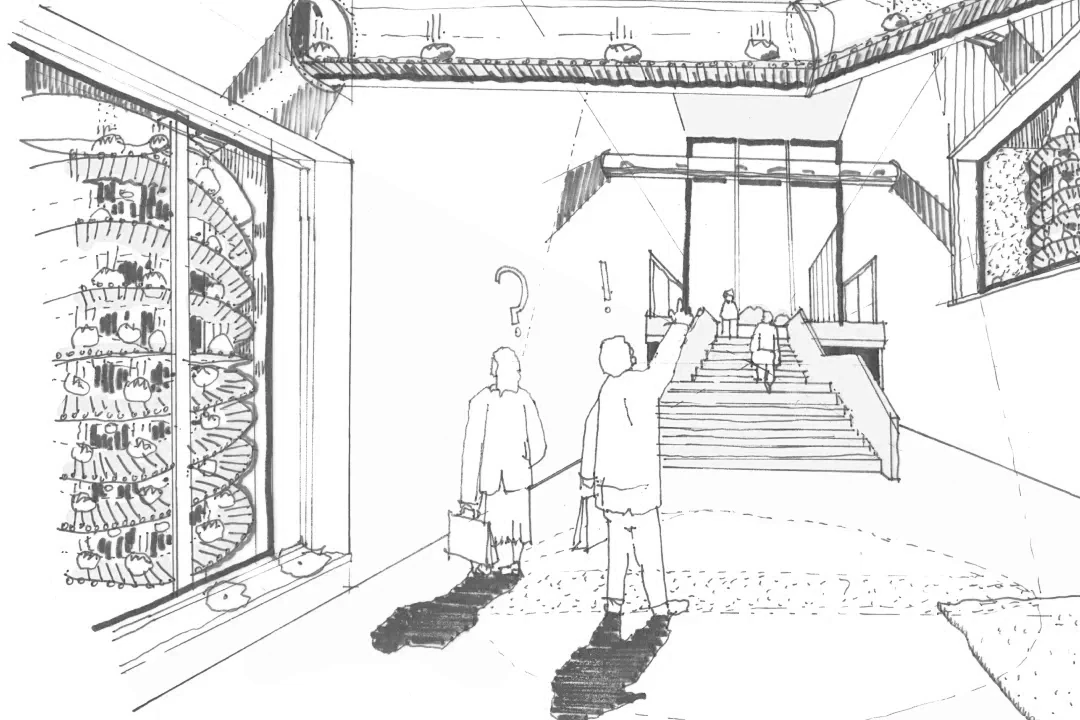
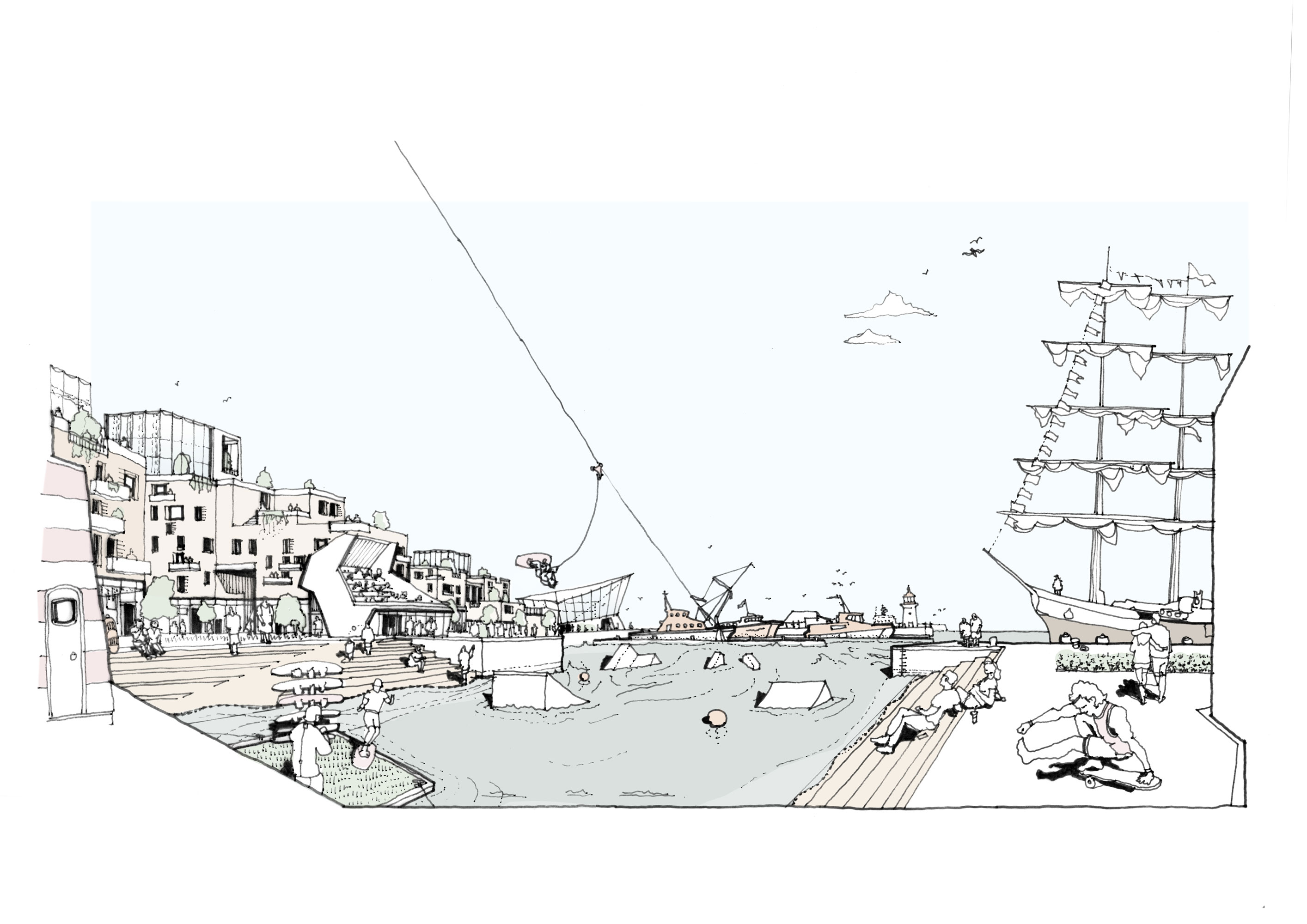
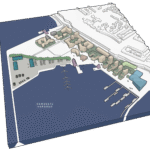
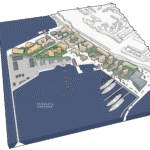
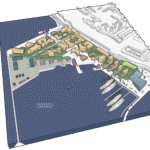
The masterplan proposes a new clean-energy waterfront: an innovation and education campus focused on renewable technologies, embedded within a mixed-use harbour environment. Drawing on Ramsgate’s proximity to offshore wind farms, solar infrastructure and maritime expertise, the harbour is repositioned as a hub for skills, research and industry — supported by housing, hospitality and cultural uses that bring life back to the water’s edge.
‘A working harbour once again — this time powering the transition to a low-carbon economy.’
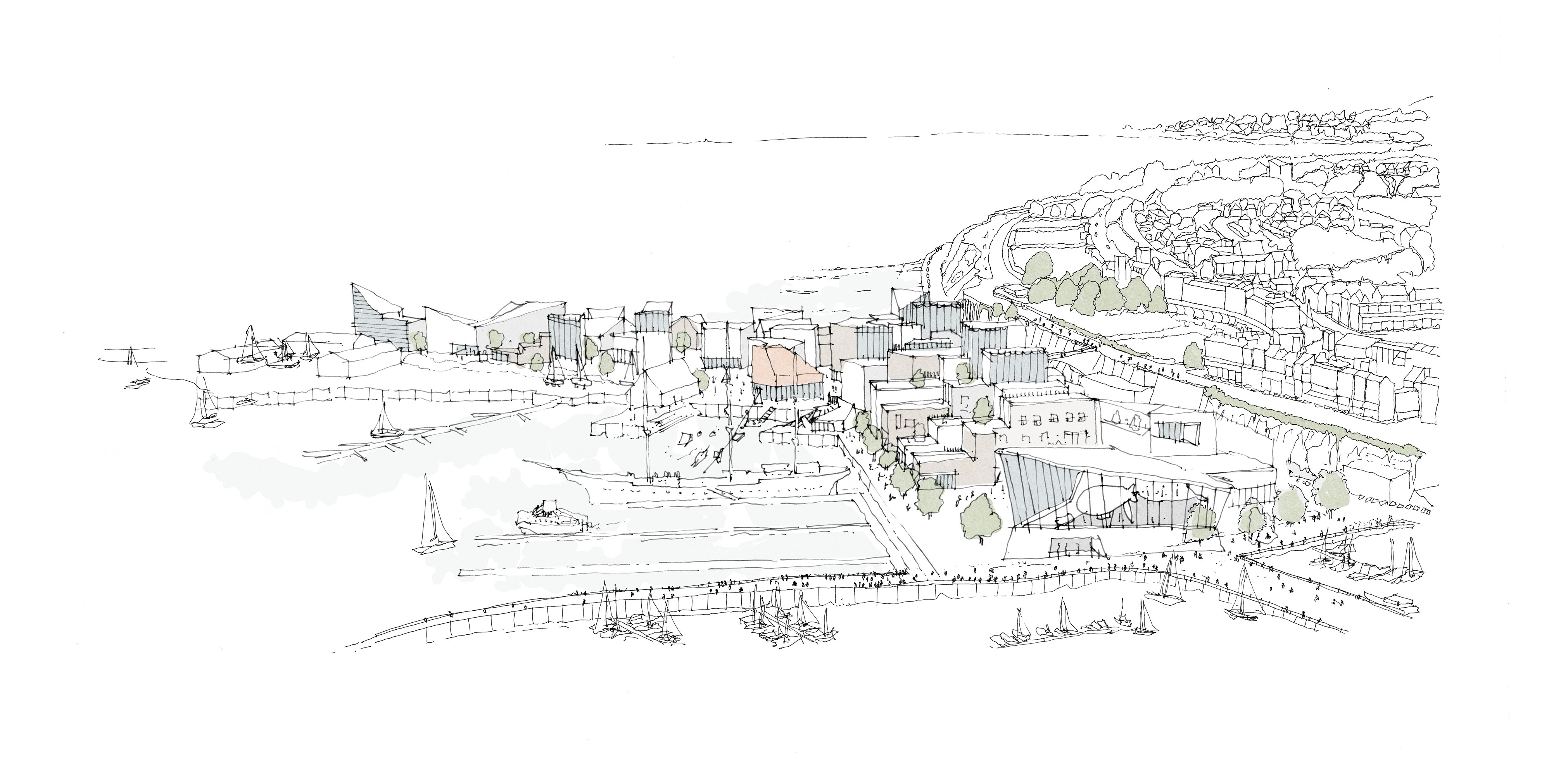
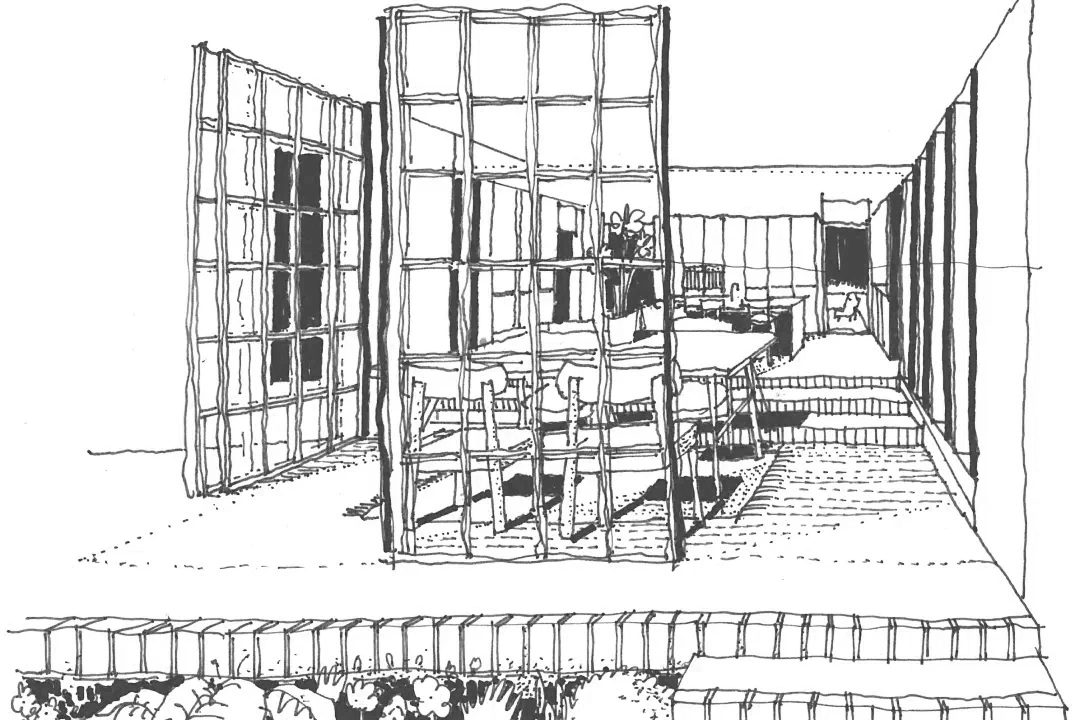
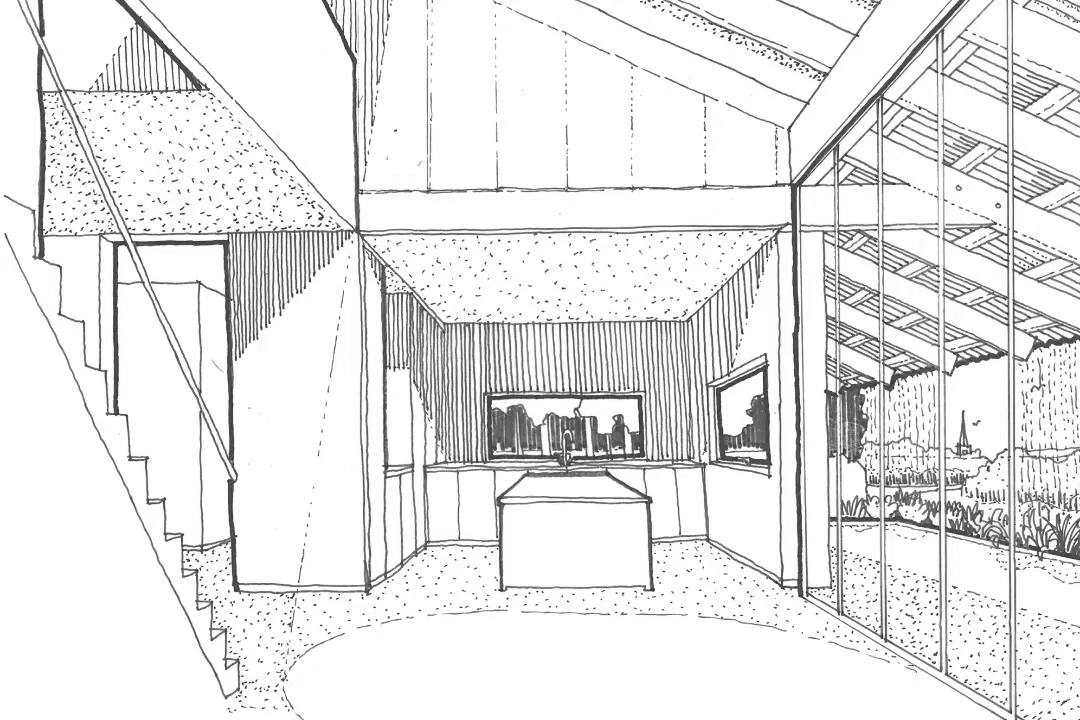
Architecture is used here as an enabling structure rather than an object. Phased development allows investment to be unlocked incrementally, balancing risk while maintaining momentum. Residential and commercial components generate revenue to support long-term regeneration, while public spaces, waterfront routes and new cultural destinations reconnect the harbour to the town and its people.
The proposal demonstrates how strategic architectural thinking can transform loss-making infrastructure into a productive civic economy. Ramsgate Harbour is not reimagined as a singular destination, but as a resilient urban system — one that creates jobs, supports education, attracts visitors and establishes a lasting legacy for the town, Thanet and the wider East Kent region.
‘Architecture as infrastructure: enabling growth, reducing risk and sustaining value over time.’
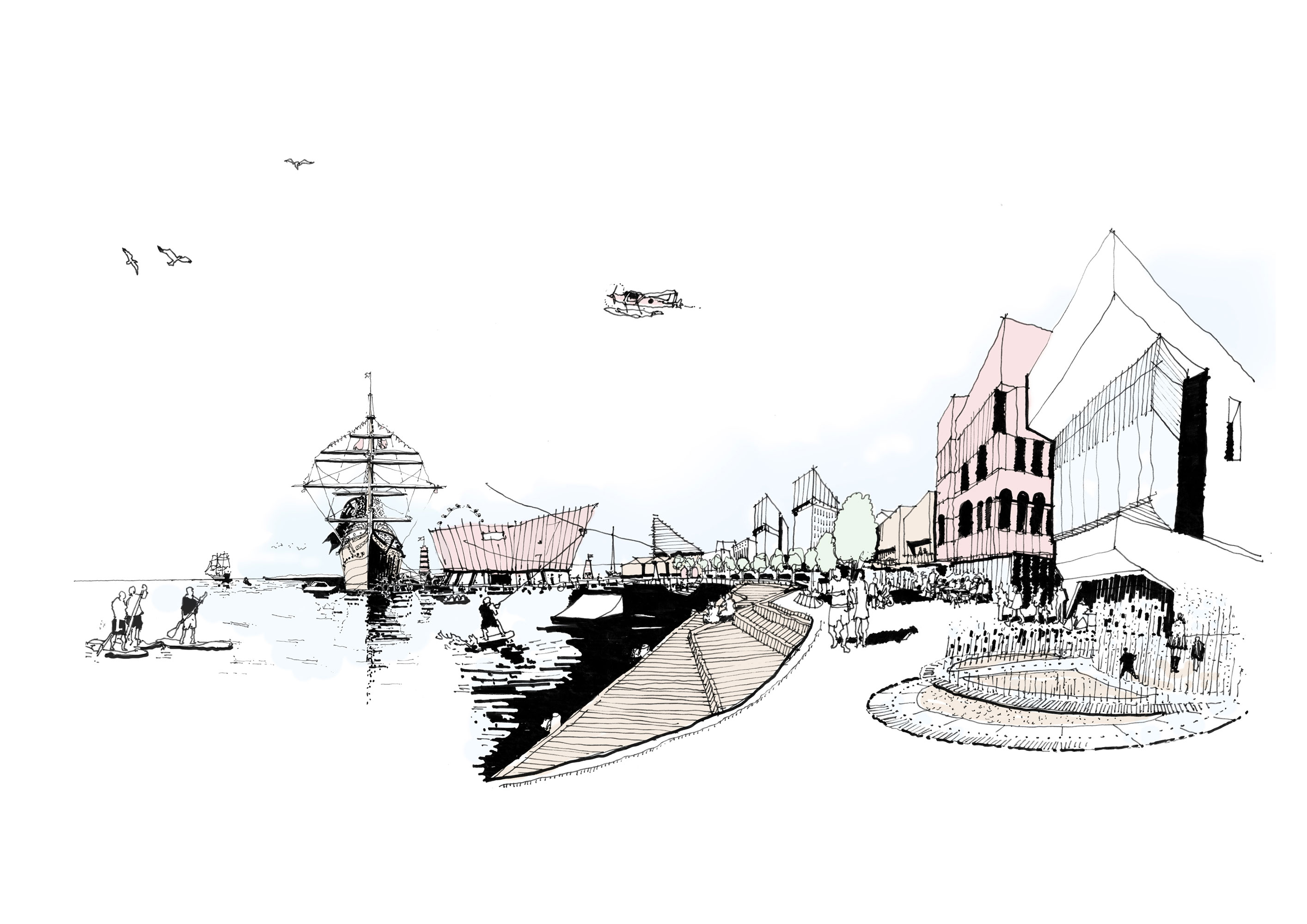
Architecture is used here as an enabling structure rather than an object. Phased development allows investment to be unlocked incrementally, balancing risk while maintaining momentum. Residential and commercial components generate revenue to support long-term regeneration, while public spaces, waterfront routes and new cultural destinations reconnect the harbour to the town and its people.
Project Team
Christopher Taylor, Timothy Hare,
Karl Bowers, Charlie Whittington